Agentic Intake Coordinator
Telehealth
Project Overview
A leading online therapy platform serving millions of users approached Nester Labs to build an AI-powered voice booking system. Their goal: scale appointment scheduling capacity while maintaining the empathy and safety standards essential to mental health services.
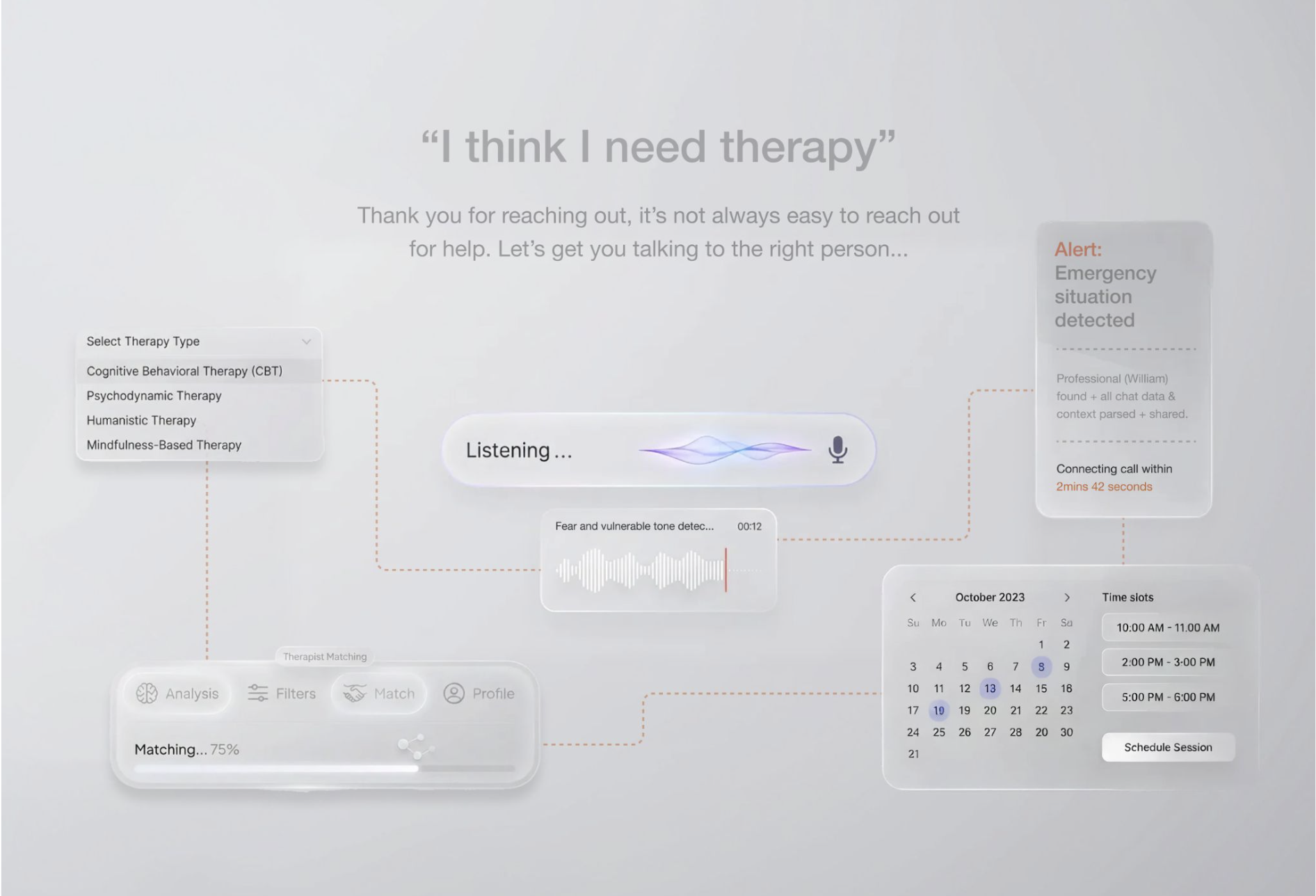
We designed and built Sarah, an AI voice assistant that handles the complete booking journey -from understanding patient needs to matching them with the right therapist and confirming appointments. The system includes real-time crisis detection, HIPAA-compliant data handling, and a multi-agent architecture for handling complex queries.
Result: Average booking time dropped from 15+ minutes to under 4 minutes, with 24/7 availability and a 78% reduction in cost per booking.
The Client's Challenge
The client's existing appointment booking process relied on human agents during business hours. As demand grew, this created operational bottlenecks and scaling limitations.
| Challenge | Business Impact |
|---|---|
| Long Booking Times | 15+ minute average call duration with human agents |
| Limited Availability | Phone support only during business hours (9 AM - 6 PM) |
| High Operational Costs | Growing customer service team to meet demand |
| Inconsistent Experience | Variable quality depending on agent training |
| Scaling Limitations | Unable to handle peak demand periods effectively |
The Human Element
Mental health services require a delicate balance. Patients often feel vulnerable when seeking help. Any automation solution needed to:
- Preserve empathy and warmth in every interaction
- Detect crisis situations in real-time and respond appropriately
- Provide a safe space for users to share sensitive information
- Maintain strict HIPAA compliance for all data handling
- Match patients with therapists based on complex criteria
Our Solution
We built a comprehensive AI voice booking system with safety and compliance as foundational requirements. Here's how we approached each major challenge:
1. Multi-Agent Conversation System
The Problem: Booking conversations involve multiple domains -scheduling, insurance, pricing, and therapy specializations. A single-agent approach would struggle with this complexity.
Our Approach: We designed a multi-agent architecture where specialized agents handle different aspects of the conversation:
- Sarah (Booking Agent): Primary conversationalist handling the booking flow
- Charles (Pricing Agent): Specializes in insurance and pricing queries
- Info Specialist (RAG): Retrieval-augmented generation for complex policy questions
- Intelligent Tool Suite: Personal info, therapy preferences, scheduling, and insurance tools
Result: Seamless handoffs between agents, with each specializing in their domain while maintaining conversational continuity.
2. Safety-First Architecture
The Problem: Mental health patients may express crisis indicators during booking. The system must detect these and respond appropriately -this is non-negotiable.
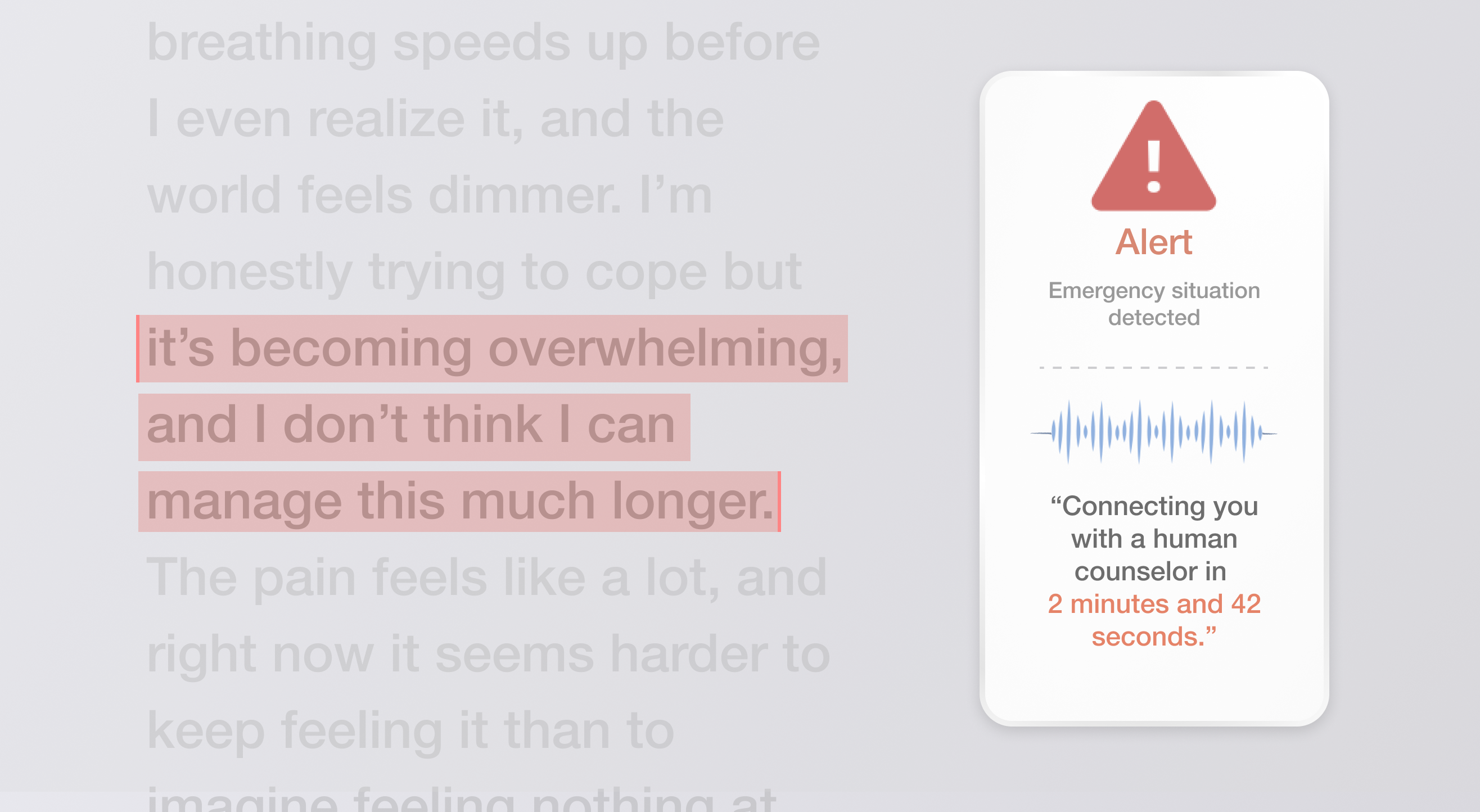
Our Approach: We built a multi-layer safety pipeline that processes every message:
- Input Guardrails: Block harmful content before processing
- Content Moderation: Analyze messages for policy violations
- Crisis Detection: Real-time monitoring for self-harm indicators
- Protected Message Delivery: Critical safety information cannot be interrupted
- Output Guardrails: Ensure all responses are appropriate and helpful
Result: Immediate escalation when crisis indicators are detected, with 988 Suicide & Crisis Lifeline resources provided and graceful handoff to human counselors.
3. 4-Tier Intelligent Therapist Matching
The Problem: Matching patients with therapists involves multiple criteria: insurance (22+ providers), age requirements, specializations, gender preferences, and availability. An exact match isn't always possible.
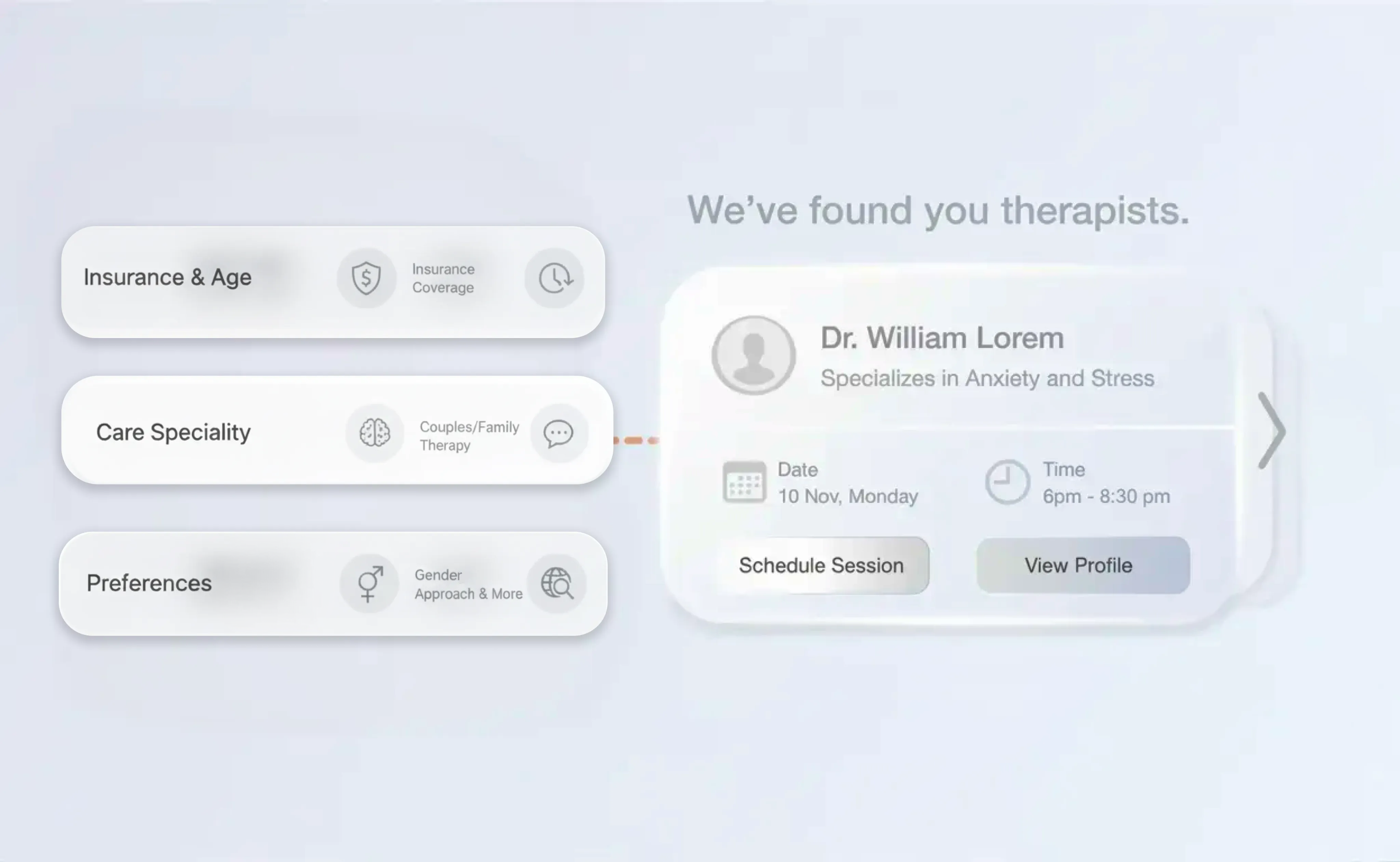
Our Approach: We built a progressive 4-tier matching engine that relaxes criteria intelligently:
| TIER 0 | TIER 1 | TIER 2 | TIER 3 |
| Hard Filters | Exact Match | Expanded | Flexible |
| Insurance, Age (never relaxed) | All preferences met | All specializations considered | Gender preference relaxed |
Result: The system always finds an option -never dead ends. Patients get the best possible match, with transparent communication about any relaxed criteria.
4. HIPAA-Compliant Infrastructure
The Problem: Healthcare data requires strict compliance with HIPAA regulations. Every component must be designed with privacy and security in mind.
Our Approach: We architected the system with compliance as a foundational requirement:
- Encryption at Rest: All patient data encrypted with customer-managed KMS keys
- Encryption in Transit: TLS/mTLS for all communications
- Audit Logging: 7-year retention of all data access events via CloudTrail
- Access Controls: Role-based access with principle of least privilege
- Data Isolation: Session-based architecture prevents cross-contamination
Result: Full HIPAA compliance with comprehensive audit trails and enterprise-grade security.
5. Real-Time Voice Conversation
The Problem: Voice AI must feel natural and responsive. Latency breaks trust, especially for vulnerable patients seeking mental health support.
Our Approach: We built on OpenAI's Realtime Voice API with custom optimizations:
- Natural language understanding that handles interruptions gracefully
- Context retention throughout the conversation
- Warm, empathetic voice persona specifically designed for mental health
- Dual-channel access: phone (Twilio) and web-based
Result: Conversations that feel human, building trust from the first interaction.
Core Innovation: The Real-Time Voice Pipeline
The architecture is centered around maintaining sub‑second latency and absolute reliability, critical standards for a healthcare application.
- Real-time Voice Foundation: Direct integration with the OpenAI Realtime API provides low-latency Speech‑to‑Text and Text‑to‑Speech processing, enabling fluid voice interactions necessary for high‑quality user experience.
- Function Calling & Tool Integration: The LLM uses native function calling to seamlessly interact with external utilities, allowing it to maintain conversation flow while performing complex tasks (e.g., checking appointment availability or validating collected data).
The Booking Experience
We designed a 4-step conversational flow that feels natural while gathering all required information:
| Step | Example Dialogue |
|---|---|
| Step 1 - Warm Welcome | Hi, I'm Sarah. I'm here to help you schedule an appointment with a therapist. Before we begin, I want you to know this is a safe space. What's your name? |
| Step 2 - Understanding Needs | Thanks, Michael. What brings you here today? Are you looking for help with something specific like anxiety, stress, or relationships? |
| Step 3 - Finding the Right Match | I found 3 therapists who specialize in anxiety and accept Blue Cross Blue Shield. Dr. Sarah Johnson has an opening this Thursday at 2 PM. Would that work for you? |
| Step 4 - Seamless Confirmation | Wonderful! Your appointment with Dr. Johnson is confirmed. You'll receive a confirmation email shortly. |
Enterprise-Grade Technical Highlights
- Professional Guardrails Framework: Implements strict, healthcare‑specific conversation boundaries enforced by the Conversation Manager. This includes real‑time crisis detection, professional tone enforcement, and a strict boundary against providing medical advice.
- Dynamic State Management: The Intake Request Manager uses sophisticated state machine logic for AI‑driven adaptive questioning. It intelligently tracks booking progress and handles information provided by the user in any non‑linear order.
- HIPAA‑Compliant Memory Architecture:
- Redis Cluster provides sub‑50ms access for active session state.
- DynamoDB/RDS provides HIPAA‑compliant, persistent storage for audit trails and conversation history.
- Vector Database (Pinecone/Weaviate) is used for RAG‑powered intelligence, enabling context‑aware semantic search of policy documents and professional profiles.
- Comprehensive Analytics & Optimization: A dedicated Analytics API powers real‑time conversation monitoring, tracks booking completion funnels, and generates automated summaries within 30 seconds of conversation completion for operational review.
System Architecture
We designed a cloud-native architecture on AWS optimized for healthcare compliance and scalability. The system integrates OpenAI's Realtime Voice API with Twilio for phone access, multi-agent orchestration for complex conversations, and HIPAA-compliant data storage and processing pipelines.
| Layer | Components We Built |
|---|---|
| Conversation | OpenAI Realtime Voice API, Twilio Gateway, Web UI Interface |
| Intelligence | Multi-Agent System (Sarah, Charles, Info Specialist), Tool Suite |
| Safety | Input/Output Guardrails, Content Moderation, Crisis Detection |
| Matching | 4-Tier Provider Matching Engine, Insurance Validation |
| Integration | Client Booking API (OAuth2 + mTLS), Provider Availability Cache |
| Infrastructure | AWS App Runner, ECS Fargate, DynamoDB (9 tables), KMS, CloudTrail |
Results & Impact
Quantitative Outcomes
| Metric | Before | After | Improvement |
|---|---|---|---|
| Average Booking Time | 15+ min | 3.5 min | 77% reduction |
| First-Call Resolution | 68% | 94% | 38% increase |
| Service Availability | 9 AM - 6 PM | 24/7 | 167% increase |
| Cost Per Booking | $12.50 | $2.80 | 78% reduction |
| Patient Satisfaction | 4.1 / 5 | 4.7 / 5 | 15% increase |
- Booking Time Reduction: From 15+ minutes to under 4 minutes (73% reduction)
- Cost Efficiency: 78% reduction in cost per booking
- Availability: 24/7 booking capability
- Scalability: Handles peak demand without proportional cost increase
Business Impact
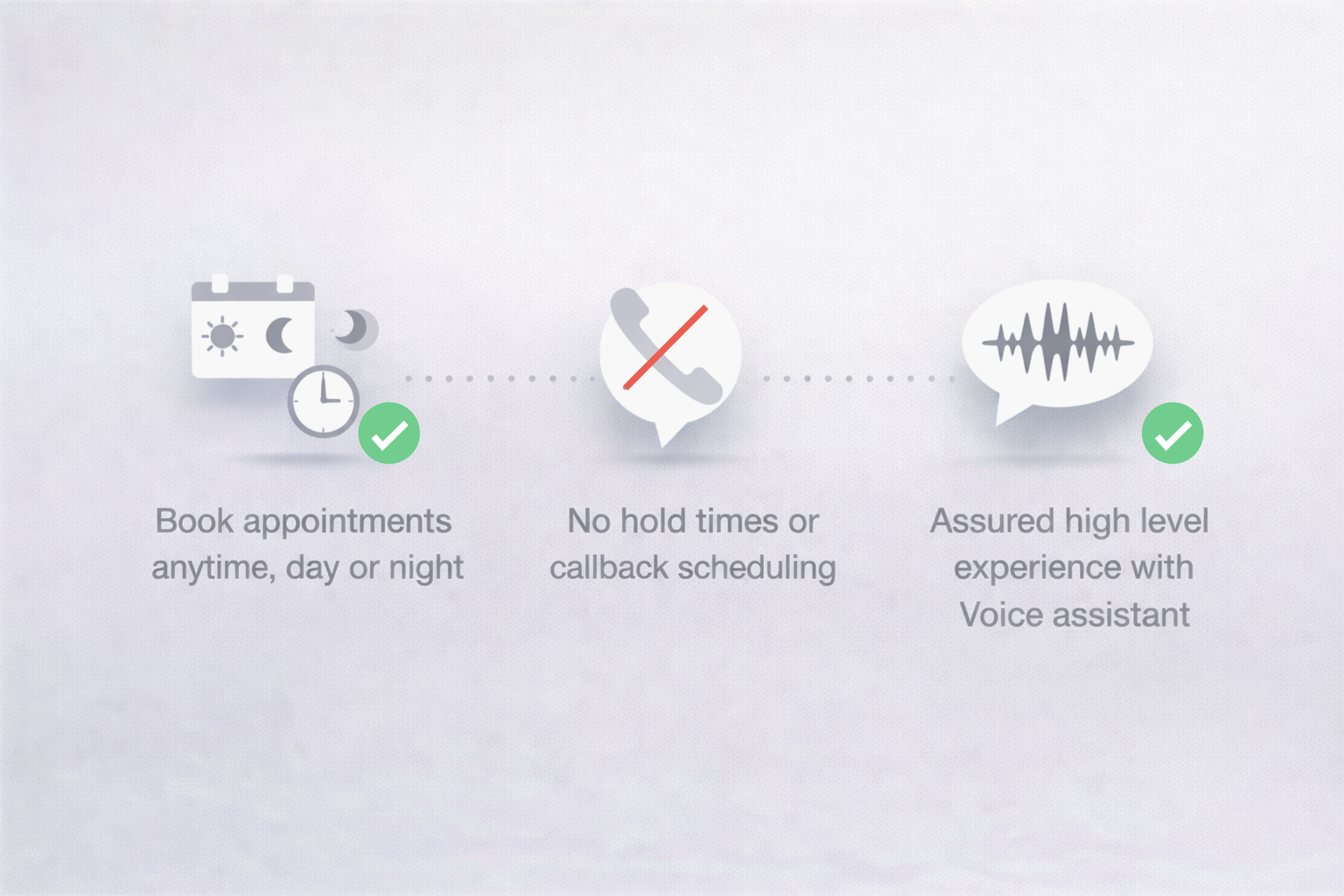
For Patients:
- Book appointments anytime, day or night
- No hold times or callback scheduling
- Consistent, empathetic experience every time
- Crisis support always available
For the Client:
- Scaled booking capacity without proportional cost increase
- Human agents freed for complex cases requiring personal attention
- Consistent brand experience across all touchpoints
- Real-time insights into booking patterns and patient needs
Engagement Summary
What We Delivered:
- Complete system architecture design for HIPAA-compliant voice AI
- Multi-agent conversation system with specialized booking agents
- Real-time crisis detection and safety escalation pipeline
- 4-tier intelligent therapist matching engine
- Insurance validation for 22+ providers
- Phone (Twilio) and web-based voice interfaces
- Client booking API integration with OAuth2 + mTLS
- AWS cloud infrastructure with full HIPAA compliance
- Comprehensive audit logging and monitoring
Technologies Used
OpenAI Realtime Voice API, Twilio, AWS (App Runner, ECS Fargate, DynamoDB, KMS, CloudTrail, Secrets Manager, CloudWatch), OAuth2/mTLS Authentication, RAG for Knowledge Base
Our Approach
- Domain Understanding First: We invested significant time understanding the mental health space before writing code
- Safety as Architecture: Crisis detection and HIPAA compliance were foundational, not afterthoughts
- Human-Centered AI: Technology that enhances human connection, not replaces it
- Production-Grade Engineering: Enterprise scalability, reliability, and security from day one